
August 26, 2026
Sam Menzin: Statcast 2.0 and How Biomechanical Data Is Changing the Way Scouts Evaluate Prospects
Sam Menzin spent fourteen years with the Detroit Tigers, rising to Vice President and Assistant General Manager. Here he looks at what full-body tracking data actually settles about a prospect, and what it leaves to the scout.
For a hundred years, a scouting report was a piece of writing. Someone watched a player, formed an impression, and translated it into language other people in the organization could act on. Loose arm action. Stiff lower half. Gets long to the ball. Those phrases carried real information, but they were descriptions, not measurements, and two scouts using the same phrase often meant different things by it.
That gap is the one closing right now. The tracking systems in Major League parks no longer just follow the ball. They follow the body, and they do it precisely enough that a good deal of what used to be written down as impression can now be written down as a number. I spent fourteen years inside a front office watching this arrive in stages, and it has changed how these calls actually get made more than any single analytical development since the batted-ball data of the mid-2010s.
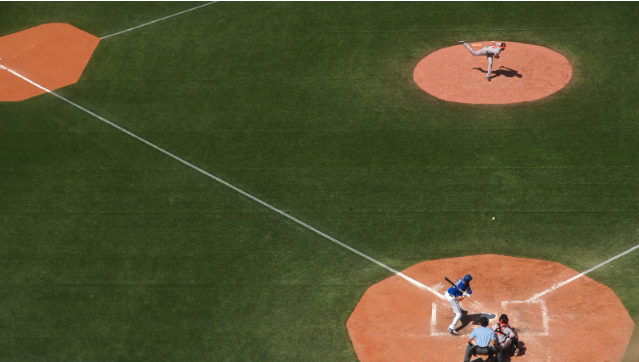
What “Statcast 2.0” Actually Refers To
The phrase is shorthand rather than a product name, and it is worth being precise about what sits underneath it.
When Major League Baseball moved Statcast onto Hawk-Eye's platform in 2020, it replaced a radar-based system with twelve high-frame-rate cameras in every park, tracking the ball and every player on the field to a stated accuracy of about a tenth of an inch. The genuinely new capability was not ball tracking, which already existed. It was pose tracking: the system measures multiple points on a player's body roughly thirty times a second, capturing a skeleton in motion rather than an object in flight. In 2023, the cameras dedicated to the pitcher and hitter were upgraded from 100 to 300 frames per second.
The volume is hard to grasp. Industry estimates put it at roughly 24 terabytes per game across a 2,430-game regular season. That number is worth sitting with, because it explains why the competitive question has shifted. Nobody is short of data. The clubs that gain anything are the ones with the infrastructure and the people to turn it into an answer, and a fair number of organizations are still analyzing it with methods that predate it.
Bat Tracking Turned Feel Into Numbers
The clearest illustration came with bat tracking, which was captured since the second half of the 2023 season and made public in 2024.
Before it, a hitter's swing was assessed through its outcomes. Exit velocity told you how hard the ball left, launch angle told you where it went, and everything upstream of contact was a matter of the eye. Now the swing itself is measured. Bat speed at the sweet spot. Swing length, meaning the total distance the bat head travels through space before impact. Attack angle, the vertical angle of the barrel at contact. Attack direction, whether the barrel is working toward the pull side or the opposite field. Swing path tilt, the steepness of the arc over the last forty milliseconds.
What that does to evaluation is subtle and important. It separates a hitter's process from his results. A young hitter can post an ordinary batting line while producing elite bat speed and a repeatable path, and those two facts point in opposite directions. The old scouting report would try to reconcile them in prose. The new one can say the swing is a major league swing and the approach or pitch recognition needs work, which is a completely different development plan than “he needs to get stronger.”
It also shortens the sample problem. Batting average takes hundreds of plate appearances to mean anything. Bat speed stabilizes almost immediately, because it is a physical measurement rather than an outcome filtered through pitching, defense, and luck.
What It Proves, and What It Only Suggests
I want to be careful here, because the enthusiasm in this area tends to outrun the evidence.
Biomechanical data proves physical facts. It establishes that a pitcher's arm slot dropped three degrees across a season, that a hitter's swing lengthened under two strikes, that a player's mechanics changed between April and August. Those are not interpretations. They are measurements, and they settle arguments that used to run on competing memories.
What the data suggests, rather than proves, is what those facts mean. A dropping arm slot might be fatigue, a deliberate adjustment, or the early signature of an injury, and the data will not tell you which. The clubs that handle this well pair the measurement with the people who know the player. The clubs that handle it badly treat a correlation from a few hundred pitchers as a law and act on it with more confidence than it deserves.
The injury question matters most here, and I urge caution. Mechanics that look risky on a screen are not a diagnosis, and organizations that start making roster decisions on that basis are taking on a kind of risk they may not have priced.
The Amateur Gap Is the Real Story
Here is the part that gets discussed least and matters most for scouting.
All of this infrastructure sits in professional parks. High school fields and most college programs have nothing like it. Portable motion capture and markerless systems have made real progress, and some programs have invested, but access is deeply uneven and tends to track family resources rather than talent. A player at a well-funded travel program may arrive with a biomechanical file. A player from a small public school arrives with what a scout wrote down.
That asymmetry cuts in a direction people do not always expect. It doesn't simply mean well-measured players get overvalued. It means everyone else's evaluation reverts to the traditional scouting eye, and the gap between the two groups becomes a source of error rather than insight. Part of why I care about evaluating amateur players with data in a structured way is that the alternative is not neutrality. It is a process where a player's visibility depends on his zip code.
For clubs, the practical consequence is that the amateur draft is now evaluated on two different evidentiary standards at once, and the discipline is not to confuse better-documented with better.
What the Scout Is Still For
None of this makes the scout obsolete, and I would say the opposite has happened.
The measurements have absorbed the least reliable part of the job: estimating physical qualities by eye. Nobody needs a human to guess at bat speed anymore. What remains is what machines can't access. How does this player handle a bad month? Does he take instruction or resist it? Is the delivery he has now the one he will keep, or is he still growing into his body? Will he be the same competitor in front of 40,000 people that he is in front of 40?
Those questions decide careers, and people who have spent time around the player answer them. The best evaluators I worked with did not treat the data as a rival. They used it to stop wasting judgment on what could be measured, leaving more judgment for what could not.
How I Would Use It
If I were building an amateur evaluation process today, I would hold to three rules.
Measure everything measurable, and stop arguing about it. Physical qualities are settled questions now, and organizations that keep debating them waste meetings.
Treat the biomechanical file as evidence, never as a verdict. It should raise questions for a scout to answer, not close them before he is asked.
And weight the report by what was available, not by how much of it there is. A thin file on a player nobody measured is not a red flag. It is a gap, and the job is to fill it rather than quietly downgrade him for it.
The sport has spent a decade getting better at measurement. The next decade will be decided by which organizations get better at knowing what their measurements are worth.